
Mathematics is often seen as a daunting subject for many adults. We remember the stress of long equations and the fear of getting the wrong answer in front of the class. This fear often starts much earlier than we realize. At The Little Years with Windress, we believe that solving math anxiety is one of the most important gifts you can give your child. By changing how we introduce numbers and logic during the first six years of life, we can ensure that your child grows up viewing math as an exciting puzzle rather than a source of stress.
The Root of the Problem
Most instances of math anxiety stem from a lack of foundational understanding. When a child is forced to memorize symbols and rules without understanding what they represent, they begin to feel lost. As the concepts get more complex, this feeling of confusion turns into a deep seated fear. This is why our parenting consultancy focuses on a concrete approach. Solving math anxiety begins by making the invisible visible. We take abstract numbers and turn them into physical objects that a child can touch and move.
When a child can hold a group of blocks or count physical cards, the concept of quantity becomes real. They are no longer guessing at what a number means. They are seeing it with their own eyes. This immediate feedback builds confidence. A child who feels confident in their ability to understand the basics is much less likely to develop fear later on. We prioritize this hands-on discovery because it aligns with how the young brain naturally learns.
Beyond Simple Counting
Many people think that if a child can count to twenty, they are good at math. However, rote counting is very different from mathematical logic. Solving math anxiety requires us to teach children the relationships between numbers. We want them to understand that five is more than three and that four can be broken down into two and two. This is known as number sense, and it is the bedrock of all future mathematical success.
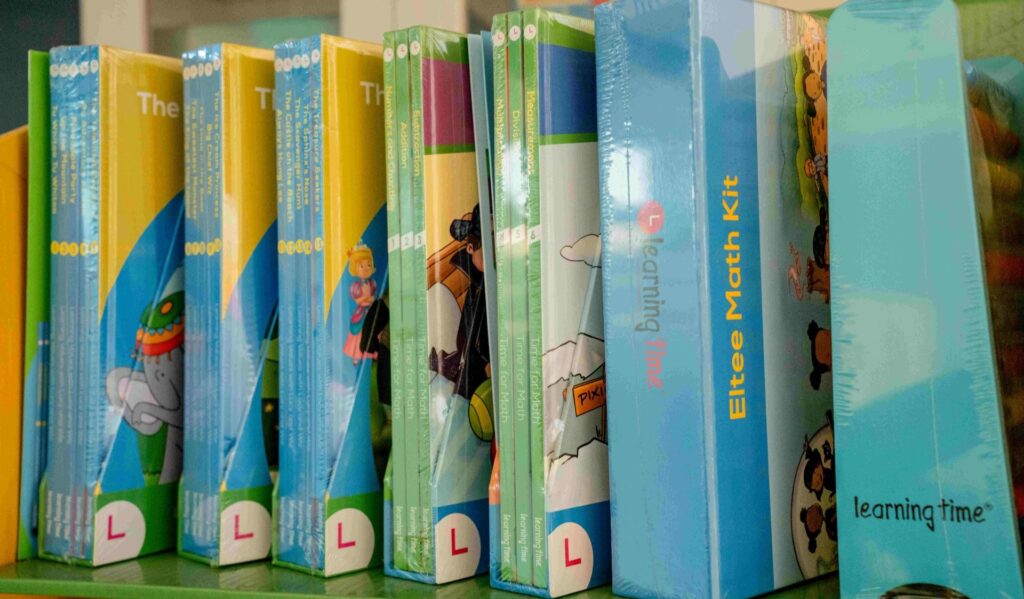
Through our specialized consulting and the use of the A+ Program, we introduce these concepts through play. We use tools like the Time for Math series to present logical challenges. Instead of a boring worksheet, a child might be asked to help a character solve a problem by grouping items or identifying patterns. This keeps the child engaged and curious. When math is part of a story or a game, the brain stays relaxed and open to learning. This relaxed state is essential for preventing the flight or fight response that often accompanies anxiety.
The Role of Logic in Mathematics
Math is essentially the language of logic. To be good at math, a child needs to understand how to sequence ideas and identify cause and effect. This is why we integrate logic cards into our early learning strategy. As seen in our program tools, we use Who and Does What templates to help children build logical structures. This type of analytical thinking is the secret to solving math anxiety before it ever starts.
When a child learns how to build a logical sentence, they are using the same neural pathways required for building a mathematical equation. They are learning that there is a structure to the world and that they have the power to understand and manipulate that structure. This sense of agency is the opposite of anxiety. It tells the child that they are a problem solver. We focus on these transferable skills because they create a well rounded thinker who is ready for any academic challenge.
Creating a Math Positive Environment
The way we talk about math at home has a huge impact on our children. If a parent says they were never good at math, the child begins to think that math is a talent you are born with rather than a skill you can learn. Solving math anxiety requires a shift in our household language. We should focus on the fun of finding a solution and the beauty of patterns in nature.
Our consultancy helps parents create a math positive home. We show you how to find math in everyday activities, such as baking, setting the table, or counting steps. By making math a normal and enjoyable part of life, we remove the pressure. There are no wrong answers in a kitchen or a garden; there are only opportunities to observe and learn. This low pressure environment allows the child’s natural curiosity to lead the way, building a strong and fearless foundation.
The Power of Concrete Learning
In the early years, the brain is designed to learn from the physical world. Abstract concepts like algebra are years away, but the foundation for them is laid today through tactile play. This is why hands-on tools are so effective at solving math anxiety. When a child uses their hands to solve a problem, they are engaging multiple parts of their brain.
The A+ Program includes activity books and specialized games that turn mathematical problems into active play. When a child uses the Eltee Pen to interact with a page, they get immediate auditory feedback. This helps to reinforce the concept without the need for a parent or teacher to constantly correct them. This independence is vital for building self esteem. A child who can figure things out on their own feels powerful. That power is the ultimate shield against academic anxiety.
Identifying the Early Signs of Hesitation
Part of our professional consulting service is helping parents identify when a child might be feeling overwhelmed. A child might not say they are afraid of math, but they might avoid certain games or become frustrated with counting tasks. Solving math anxiety requires us to step in early and provide the right level of support.
We teach parents how to “scaffold” learning. This means providing just enough help so the child can succeed, and then slowly stepping back as they gain confidence. If a task is too hard, we break it down into smaller, more manageable pieces. This ensures that the child always experiences success. Success builds momentum, and momentum keeps anxiety at bay. We are here to help you navigate these subtle emotional shifts so your child stays on a positive learning trajectory.
The Connection Between Language and Logic
Many people are surprised to learn that language skills are closely linked to math skills. To solve a word problem, a child first has to understand the language and the logic behind the question. This is why we value the Learning Values with Lucy and Wiz series alongside our math tools. Solving math anxiety is easier when a child has a strong grasp of vocabulary and logical sequencing.
By reading stories that involve problem solving and moral dilemmas, children are practicing the high level thinking required for math. They are learning to analyze situations and predict outcomes. This holistic approach ensures that no part of the brain is left behind. We are building a child who is not only good at numbers but also excellent at reasoning. This comprehensive competence is what creates the A+ Edge in modern education.
Preparing for the School Transition
The transition to primary school can be a significant trigger for academic stress. Suddenly, math becomes formal, timed, and graded. If a child enters this environment with a shaky foundation, solving math anxiety becomes much harder. Our goal is to ensure that your child enters the classroom already seeing themselves as a math whiz.
Because our programs align with the cognitive milestones children face in school, the material will feel familiar to them. They will recognize the patterns and the logic, even if the symbols look a bit different. This familiarity acts as a safety net. It allows them to focus on the new lessons without being overwhelmed by fear. At The Little Years with Windress, we specialize in making this transition smooth and successful for both Kenyan and international families.
The Long Term Benefits of Math Confidence
Confidence in mathematics opens doors to many of the most exciting careers in the future. From engineering and technology to finance and art, math is the underlying structure of almost everything we do. Solving math anxiety in the little years is an investment in your child’s entire career path.
A child who is comfortable with logic and numbers is more likely to take risks and explore new ideas. They are not limited by the belief that they are “not a math person.” We believe that everyone is a math person if they are taught in a way that makes sense to them. By providing the right tools and the right guidance today, you are ensuring that your child has every opportunity available to them tomorrow.
Supporting Different Learning Styles
Every child has a unique way of processing information. Some need to see it, some need to hear it, and some need to move it. Traditional rote learning often fails because it only uses one style. Solving math anxiety requires a multi sensory approach that respects these differences.
Our consultancy shows you how to adapt the A+ Program to fit your child’s specific needs. If your child is a visual learner, we focus on the bright illustrations and patterns. If they are an auditory learner, the dramatized sounds of the Eltee Pen become our primary tool. For tactile learners, the physical cards and templates are the key. This personalized attention ensures that no child falls through the cracks and that every child feels capable and smart.
The Importance of Spatial Reasoning
Spatial reasoning is the ability to visualize shapes and how they move in space. This is a critical component of mathematical success that is often overlooked. Solving math anxiety often involves building these spatial skills through puzzles and construction play.
The Time for Math series includes activities that challenge children to think about shapes, symmetry, and space. When a child learns how to fit pieces together or recognize a pattern from a different angle, they are strengthening their mathematical brain. These skills are the foundation for geometry and advanced calculus later on. By making these concepts part of early play, we ensure that they feel natural and easy when they are introduced in school.
Why Hands-On Tools Outperform Screens
In an age of digital apps, it can be tempting to put a child in front of a screen to learn math. However, research shows that physical interaction is far superior for early brain development. Solving math anxiety is more effective when a child can manipulate physical objects. The brain receives much more data from touching a card or moving a block than it does from tapping a glass screen.
The A+ Program prioritizes this physical connection. The act of pointing the Eltee Pen at a specific spot on a page requires hand-eye coordination and spatial awareness. The act of building a logical sentence with cards requires fine motor skills. These physical actions help to anchor the information in the child’s memory. It makes the learning experience more “sticky” and more meaningful, which is the ultimate goal of our parenting expertise.
Final Thoughts: Building a Fearless Future
Math should be a source of wonder, not a source of worry. By taking a proactive, hands-on approach, you can ensure that your child never has to experience the weight of academic anxiety. Solving math anxiety is about more than just numbers; it is about building the confidence to face any challenge with a logical and curious mind.
The Little Years with Windress is here to support you every step of the way. With our parenting consultancy and the powerful tools of the A+ Program, we can build a foundation of success together. Let’s turn math into your child’s favorite subject and give them the tools to solve the problems of tomorrow. Your journey toward a math confident future begins with a single discovery session.
Is your child ready to become a math whiz? Don’t wait for school to start before you address mathematical confidence. Discover how our parenting consultancy uses hands-on logic and play to build a fearless foundation. Book a Discovery Session with The Little Years with Windress today and give your child the A+ Edge.
-
Call/WhatsApp: +254 791 239 414
-
Email: inquiries@thelittleyearswithwindress.com
-
Visit our website: thelittleyearswithwindress.com
-
Discover the Program: learningtime.co