
Early childhood is a beautiful period of rapid growth, especially when it comes to communication. Parents everywhere look forward to the moments when their young children begin expressing thoughts, sharing ideas, and describing the world around them. The ability to speak clearly and confidently forms the foundation for all future academic and social success. When you intentionally boost vocabulary development in toddlers at home, you open up a world of lifelong cognitive confidence and strong self-expression. The process of learning language happens naturally through exposure, interaction, and joyful engagement. By transforming your daily environment into a rich landscape of words, sounds, and meanings, you give your child the tools they need to communicate effectively. Every interaction is an opportunity to expand their understanding. Utilizing thoughtful, creative approaches ensures that this journey is rewarding for both you and your little one.
Understanding the Science of Toddler Language Acquisition
Language acquisition in the first few years of life is incredibly dynamic. Children absorb sounds, rhythms, and structural patterns long before they speak their first clear words. To successfully boost vocabulary development in toddlers, it helps to understand how young minds process speech. They learn through contextual association, meaning they connect the words they hear with the objects they see, the textures they touch, and the actions they experience.
A multi-sensory environment significantly accelerates this process. When a toddler hears a new word while simultaneously looking at an illustrative picture and touching a related texture, the neural pathways associated with that word become exceptionally strong. This structural layering of sensory input transforms abstract sounds into concrete meanings. Rather than relying on passive listening, children thrive when they can actively engage with language in a tactile way.
Building a vast vocabulary early in life directly influences reading comprehension, emotional regulation, and social readiness. Children who can clearly articulate their needs and feelings experience greater emotional resilience and less situational frustration. By focusing on intentional language immersion today, you set a beautiful trajectory for your child’s entire educational path.
The brain of a child undergoes massive synaptic pruning and growth during the first thirty-six months. Synapses form based on the environmental stimuli the child receives. When a home is filled with rich, descriptive language, those specific linguistic pathways are reinforced and preserved. This means that talking to your child using sophisticated vocabulary, varied sentence structures, and expressive tones directly builds brain architecture. The complexity of the speech they hear is directly proportional to the complexity of the speech they will eventually produce.
To boost vocabulary development in toddlers effectively, parents should look at everyday speech as a continuous building project. Every conversation adds another brick to the foundation. This requires consistency and a commitment to using clear, expressive language throughout the day. It also means moving beyond baby talk and introducing mature, precise words within a context that makes their meaning obvious. When a child is exposed to a wide range of vocabulary in a natural, loving way, they absorb the nuances of language effortlessly.
Linguistic development can be divided into receptive language and expressive language. Receptive language is the ability to understand words, while expressive language is the ability to use words to communicate. Toddlers almost always have a much larger receptive vocabulary than an expressive one. They understand complex concepts and instructions long before they can say them out loud. Recognizing this allows you to speak to your toddler with an advanced vocabulary, knowing that their young minds are processing and storing every single word for future use.
Transform Everyday Routines into Word Rich Experiences
You do not need to set aside hours of formal lesson time to enhance your child’s language skills. The most powerful learning moments occur during standard daily routines. Mealtime, bath time, and getting dressed are perfect opportunities to introduce varied vocabulary naturally.
During breakfast, describe the colors, temperatures, and textures of the food on the table. Talk about the crispness of an apple slice, the warmth of the oatmeal, or the smooth surface of a ceramic bowl. Use descriptive adjectives and action verbs that go beyond simple nouns. Instead of merely naming the items, narrate the actions taking place, such as pouring liquid, stirring ingredients, or spreading a topping.
Bath time offers a wonderful setting for science and descriptive vocabulary. Discuss concepts like floating, sinking, splashing, and wiping. Point out how the water feels warm or how the soap creates slippery bubbles. By consistently narrating these experiences, you help your child connect everyday physical sensations with precise verbal descriptions. This constant stream of positive, active narration builds a massive mental library of words that your child will eventually use in their own speech.
Getting dressed in the morning provides another brilliant opportunity to boost vocabulary development in toddlers through routine narration. As you help your child pull on their clothing, speak about the specific attributes of each garment. Discuss the elasticity of the waistbands, the smoothness of the fabric, the brightness of the colors, and the function of buttons or zippers. Use spatial words like over, under, through, and behind to describe how the clothing moves onto their body. This helps your child master foundational prepositions while learning the names of everyday objects.
Even simple chores like putting away toys or sorting laundry can become rich educational activities. When sorting clothes, discuss the concepts of matching, pairing, size differentiation, and color categorization. Use comparative words like larger, smaller, softer, and heavier to help your child understand relationships between objects. When children are involved in these tasks, they are not just helping with the household; they are actively organizing their mental vocabulary alongside the physical world.
The secret to successful routine narration is ensuring that your speech is always active, positive, and forward-looking. Focus entirely on describing what is happening in the moment and what beautiful things will happen next. This positive framing keeps the child enthusiastic, attentive, and deeply connected to the language flow. Over time, these daily word-rich experiences form a massive repository of verbal knowledge that gives your child a significant advantage in their early communication journey.
Interactive Reading Strategies to Boost Vocabulary Development in Toddlers
Reading together is a classic way to introduce new words, but the method of reading matters immensely. Moving away from passive listening toward interactive reading turns a simple story into a rich language laboratory. Responsive reading involves asking open-ended questions, encouraging your child to point to pictures, and exploring the hidden details on every page. This method ensures that the child is an active participant in the literary experience rather than a detached observer.
To boost vocabulary development in toddlers during your reading sessions, practice dialogic reading. This technique involves a continuous back-and-forth conversation between you and your child about the book. Prompt your child to complete sentences, ask them to identify objects, expand on their answers, and repeat the expanded phrases together. If your child points to a picture of a dog, you can expand that by talking about the large, fluffy brown dog running quickly through the green grass. This technique expands their vocabulary and teaches them how words combine to create detailed descriptions.
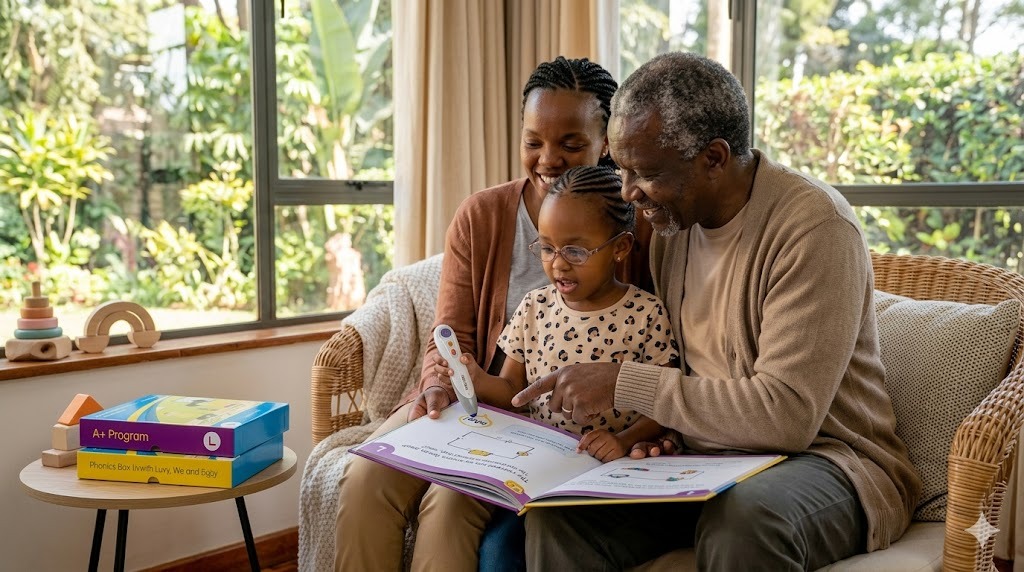
Premium educational tools elevate this experience by introducing high-quality multimedia elements that capture a toddler’s full attention. Imagine a reading system where pages come alive with rich sound effects, clear pronunciations, and cheerful music at the simple touch of a specialized pen. When children use a responsive audio tool like the Eltee Pen, they take control of their own learning. They can point to an illustration of an animal, an instrument, or a vehicle and immediately hear its corresponding name and natural sound.
This interactive feedback loop provides an autonomous way to boost vocabulary development in toddlers because it encourages repetitive exploration. Repetition is vital for phonetic awareness and memory retention. When a child hears the correct pronunciation of a complex word multiple times in an engaging, self-guided format, they naturally master the correct speech patterns and pronunciation without any external pressure. The integration of high-quality audio with premium printed books creates a perfect learning ecosystem that bridges the gap between seeing a word and understanding its spoken sound.
When choosing books for interactive reading, look for titles that feature rich, detailed illustrations and diverse vocabulary. Books that include natural science concepts, historical themes, geographical wonders, and daily life scenarios are ideal. These topics naturally introduce specialized words that do not often appear in standard daily conversations. Introducing a child to these advanced terms in a beautifully illustrated format makes the learning process completely intuitive and highly enjoyable.
By making interactive reading a cornerstone of your daily routine, you help your child develop a deep love for literature and language. They begin to see books as exciting portals of discovery rather than static objects. This enthusiasm drives them to seek out new words, ask questions about unfamiliar phrases, and use their expanding vocabulary to share their own creative ideas with the world around them.
Engaging Language Games for Joyful Daily Learning
Building an impressive vocabulary should always feel like an exciting game. Playful discovery encourages children to experiment with language and try out new phrases confidently. You can introduce simple, screen-free games that promote critical thinking, spatial awareness, and verbal expression during regular playtime.
One excellent activity is a household description treasure hunt. Instead of asking your child to find a specific item by name, describe its attributes and let them deduce what it is. You might explain that you are looking for something soft, round, and blue that sits on the living room sofa. This forces the child to process multiple descriptive words simultaneously and connect those linguistic concepts to the physical objects in their environment. Once they find the object, celebrate their success by expanding the description even further.
Another delightful option involves using story cards or picture books to build collaborative narratives. Allow your child to choose a picture, and then describe what is happening in that scene using positive framing. Ask them what the characters might do next or how a specific object feels. If your learning environment includes smart interactive audio systems, children can play built-in vocabulary games where the program asks them to locate specific objects or actions on the page. This keeps them actively thinking, moving, and vocalizing throughout their independent playtime.
You can also use classic matching games to boost vocabulary development in toddlers by adding a descriptive twist. Use cards that feature animals, vehicles, or household items. When a match is made, instead of just naming the object, challenge each other to share two distinct facts or descriptions about it. For example, if your child matches two pictures of a bicycle, you can talk about the two round wheels that spin rapidly and the shiny silver handlebars used for steering. This elevates a simple memory game into a vibrant vocabulary exercise.
Sensory bins are another phenomenal tool for language generation. Create a container filled with textured materials like smooth polished stones, soft fabric scraps, dry pasta shapes, or wooden blocks. Hide small toy animals or objects within the container. As your child digs through the bin to uncover the hidden items, encourage them to describe the physical sensations they feel. Use rich adjectives like rough, smooth, crinkly, bumpy, and sleek. This hands-on exploration ensures that linguistic terms are firmly anchored to real physical sensations.
The beauty of these language games is that they can be adapted to any setting, whether you are at home in the living room, sitting in the backyard, or taking a peaceful walk through the neighborhood. By continuously turning the exploration of the world into a joyful verbal game, you encourage your child to view communication as a tool for fun, discovery, and deep connection.
Fostering Speech Clarity and Pronunciation Naturally
As toddlers expand their vocabulary, they are also developing the fine motor skills required for clear speech and accurate pronunciation. It is entirely common for young children to substitute sounds or simplify complex words as they practice. Supporting them through positive, encouraging reinforcement ensures they remain enthusiastic about speaking and confident in their growing abilities.
The most effective way to guide pronunciation is through descriptive modeling rather than direct correction. If your child points to a water cup and uses an incomplete word, simply respond with active validation using the correct pronunciation. You can say that yes, that is a beautiful, clear cup of cool water to drink. This approach avoids making the child feel self-conscious while giving them a clear, accurate auditory example to mimic. It normalizes correct speech patterns through continuous positive exposure.
Providing high-quality auditory models is essential during this developmental stage to boost vocabulary development in toddlers effectively. Premium multimedia programs designed for early childhood use professional, crystal-clear voice narration to ensure that every syllable is pronounced perfectly. When children listen to clear, responsive audio devices during their daily play, they absorb the correct tonal inflections, sentence structures, and speech rhythms. This natural immersion builds incredible phonetic confidence, helping them transition smoothly from simple words to complex sentences.
Parents can also support speech clarity by practicing expressive vocal play with their children. Sing melodic songs together, practice gentle rhyming games, and explore playful animal sounds that require different lip and tongue movements. This playful experimentation strengthens the vocal muscles and enhances phonemic awareness, making it much easier for toddlers to articulate complex multi-syllable words clearly over time.
It is also incredibly helpful to maintain eye-level communication whenever your child is speaking to you. Bending down to look directly into your child’s eyes when they talk shows them that their words are valuable and deeply respected. It also allows them to watch the physical movements of your mouth and lips as you pronounce words. This visual mimicry is a powerful, subconscious component of language learning that helps toddlers refine their own speech mechanics naturally.
When your child experiences an environment that prioritizes clear auditory modeling, warm eye contact, and encouraging responsiveness, their language skills flourish. They learn that communication is a safe, rewarding space where they can express their wildest ideas and most profound thoughts with absolute confidence.
Designing an Organized discovery Space for Language
The physical layout of your home plays a significant role in how your child interacts with learning materials. A cluttered environment with too many unstructured toys can lead to overstimulation and short attention spans. By creating a beautiful, organized, and minimalist discovery zone, you invite focused exploration and deeper engagement with educational resources that boost vocabulary development in toddlers.
Keep books and language tools displayed at eye level on low, accessible shelves. Arrange materials so that their colorful covers face forward, instantly sparking curiosity and inviting tiny hands to reach out. When a child can easily choose a high-quality educational book or an interactive audio tool independently, they are far more likely to engage in self-directed language practice throughout the day.
Incorporate a comfortable seating area with soft pillows, a cozy child-sized chair, and excellent warm lighting to make the space feel incredibly inviting. Dedicate this area entirely to screen-free exploration, ensuring there are no digital distractions to interrupt your child’s focus or fracture their concentration. A serene, purposeful space encourages toddlers to settle down, explore detailed illustrations, listen to stories, and practice their expanding vocabulary in a calm, productive atmosphere.
To maximize the effectiveness of this space, implement a thoughtful toy and book rotation system. Instead of placing every single book and educational toy on the shelves at once, select a curated collection of materials for your child to explore each week. This keeps the environment feeling fresh, exciting, and completely manageable for a young child. When a toddler is presented with a carefully selected group of high-quality items, they spend more time deeply interacting with each tool, leading to higher levels of focus and comprehensive understanding.
You can also include a dedicated display board within this space to showcase your child’s favorite illustrations or artwork. Use this display as a dynamic conversation piece. Ask your child to describe the images, talk about the vibrant colors, and share stories about what they see. This simple addition transforms the physical environment into an interactive prompt for continuous verbal expression and creative storytelling.
Creating a dedicated, orderly space for language learning sends a clear signal to your child that reading, speaking, and discovery are highly valued activities in your home. This supportive environment gives them the physical freedom and mental clarity they need to immerse themselves fully in the beautiful world of words.
Elevating Your Home with the Learning Time A Plus Program
To truly maximize your child’s language development, providing a structured, beautifully integrated ecosystem of learning materials makes all the difference. The Learning Time A+ Program is carefully crafted to deliver a premium, multi-sensory educational experience that fits perfectly into modern family life. It combines beautiful visual books, tactile components, and innovative audio tools to create an unparalleled environment for early speech and vocabulary growth.
At the heart of this comprehensive system is the responsive Eltee Pen, an advanced interactive audio tool that pairs seamlessly with the Time to Learn book series. This powerful combination turns every page into an immersive auditory journey. As your child explores the beautifully illustrated stories, they can touch any word or image to hear instant pronunciations, delightful sound effects, and encouraging guidance. This completely screen-free approach keeps children deeply engaged while building essential cognitive and linguistic connections that boost vocabulary development in toddlers.
The program is engineered to adapt beautifully to your child’s unique pace, offering a wonderful blend of independent exploration and meaningful family bonding. It takes the guesswork out of early childhood education, giving parents complete peace of mind that their children are developing advanced literacy, speech clarity, and analytical skills through joyful, active play. The materials cover an expansive array of subjects, ensuring that your child is continuously exposed to fresh concepts and sophisticated vocabulary as they grow.
By embedding this premium program into your household, you eliminate the fragmentation that often comes with disconnected educational toys. Every book, flashcard, and audio track works in perfect harmony to reinforce key language concepts systematically. This structured progression ensures that your child builds a deep, comprehensive understanding of language that prepares them fully for future academic milestones.
Furthermore, the interactive nature of the program fosters a sense of intellectual independence in your toddler. They discover that they can unlock knowledge, hear stories, and learn new words all on their own by simply interacting with the materials. This boost in self-reliance builds immense confidence, transforming your child into an active, eager seeker of knowledge who approaches learning with genuine curiosity and boundless joy.
Investing in a cohesive, premium educational system like this is a beautiful gift for your child’s future. It establishes a strong culture of literacy and intellectual curiosity within your home, ensuring that your little one develops the advanced communication skills required to lead, inspire, and succeed in a rapidly changing world.
The Long Term Benefits of Early Language Enrichment
The commitment you make today to enrich your child’s verbal environment yields incredible dividends throughout their life. Children who experience high levels of language interaction during their toddler years enter formal schooling with a massive academic advantage. They possess superior reading readiness, advanced comprehension skills, and a natural ability to grasp complex concepts across all subjects, including mathematics and science.
Early vocabulary development is also directly linked to advanced emotional intelligence and social competence. When a child has a diverse vocabulary, they can accurately describe their internal emotional states. They can express feelings of excitement, curiosity, surprise, or fatigue with precision. This ability to articulate their inner world reduces behavioral frustrations and allows them to build deep, empathetic relationships with peers and adults alike.
Furthermore, the cognitive flexibility developed through early multi-sensory language immersion enhances problem-solving skills and creative thinking. Toddlers who learn to connect linguistic concepts with sensory inputs develop a highly interconnected brain architecture. This enables them to think critically, see unique patterns, and approach challenges with a confident, solution-oriented mindset throughout their entire lives.
By choosing to boost vocabulary development in toddlers using deliberate, creative, and premium methodologies, you are doing far more than teaching words. You are nurturing a highly articulate, confident thinker who possesses the tools to navigate the world with clarity and purpose. Your home becomes the ultimate incubator for genius, resilience, and joyful self-expression.
The beautiful conversations, shared stories, and playful language games you enjoy with your child today are building the structural foundation for their future achievements. Every descriptive word you share and every interactive book you explore together strengthens their path toward a brilliant, successful future filled with endless possibilities.
Explore the Program Through a Personalized Session
Every child possesses an incredible, natural capacity for learning, and providing the right premium resources unlocks that beautiful potential completely. Seeing how a child responds to interactive, high-quality audio and tactile materials is truly inspiring. We invite you to discover how this comprehensive system can bring immense joy and educational clarity to your household.
You can explore the full range of premium early childhood development tools by scheduling a personalized session tailored to your family’s unique needs. Our dedicated experts are delighted to show you how the books, math kits, and interactive audio tools work together to create an environment of self-reliant discovery. This personalized walkthrough allows you to see exactly how the program integrates into your daily routines to boost vocabulary development in toddlers seamlessly.
To see the system in action and explore how it will benefit your child’s language journey, take a moment to book a free demo session today. Simply navigate to our main website area where you can easily access the reservation button on the main navigation to choose a convenient time for a free discovery call. For additional inquiries, specific program details, or direct assistance, feel free to visit our dedicated Contact page where our complete support details are available. We look forward to partnering with you to nurture a happy, confident, and highly articulate lifelong learner.