
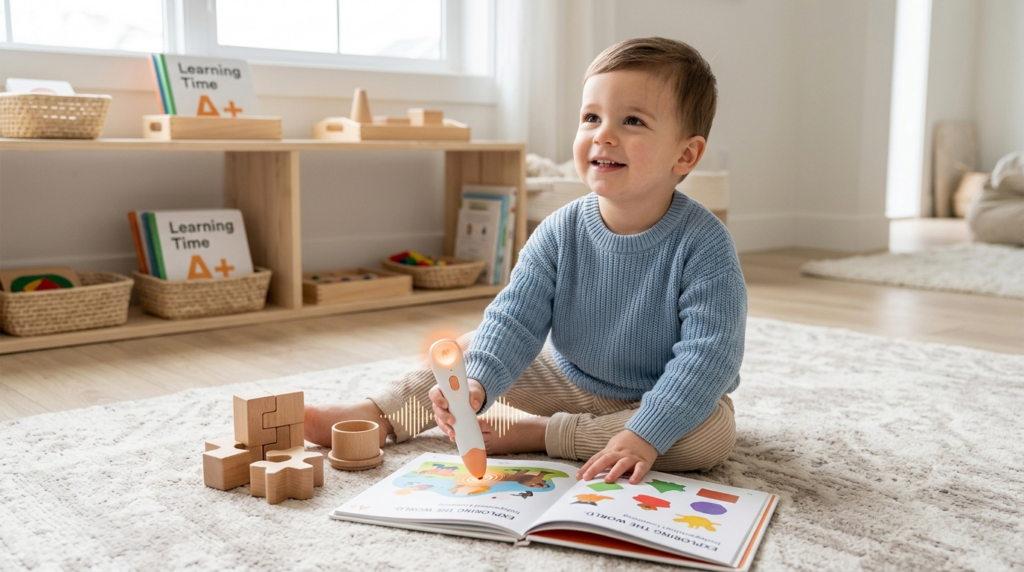
The toddler years represent a unique, foundational phase of human development where cognitive, motor, and emotional capacities expand exponentially. Parents often measure this growth by physical milestones—the first step, the first clear word, or successfully stacking a tall block tower. However, underlying these visible achievements is a vital emotional transformation. The process of exploring the world is intrinsically tied to a child’s forming sense of self. When a toddler is empowered to make decisions, solve problems, and master challenges on their own terms, they do more than just learn a new skill; they begin to believe in their own capability.
This pivotal development of self-esteem is crucial, yet it is often separated from the discussion of academic learning. Effective approaches emphasize a deep connection between these two areas, demonstrating that building confidence and independence in toddlers is best achieved when intellectual exploration is framed as an emotional victory. This comprehensive guide explores the psychological framework of autonomy, detailing practical, self-directed learning strategies and modern tools that allow intellectual mastery to fuel an unshakeable emotional resilience.
The Psychological Synergy of Autonomy and Confidence
To effectively support building confidence and independence in toddlers, it helps to understand the underlying psychological landscape. According to foundational developmental theories, such as Erik Erikson’s stages of psychosocial development, toddlers are navigating the conflict between Autonomy vs. Shame and Doubt. Their fundamental developmental drive is to achieve a degree of control over their bodies, environment, and choices.
When a toddler is given the safe space to explore independently, their brain establishes a positive feedback loop: Curiosity -> Attempt -> Success (or learned correction) -> Confidence. This loop is essential. It is not just about succeeding; it is about knowing I initiated the process. Conversely, if a child is over-managed, constantly corrected, or prevented from taking healthy exploration risks, they may internalize a lingering sense of doubt and inability.
Independence in toddlers is not defined by isolation. It is about autonomous decision-making and self-guided interaction with supportive scaffolding. Confidence is the resulting emotional outcome—a genuine, deep-seated belief that they possess the skills and persistence necessary to successfully navigate the complexities of their environment.
Shifting Focus: From Memorization to Mastery-Based Emotional Growth
Modern educational approaches that genuinely support building confidence and independence in toddlers shift away from passive, lecture-based learning or rote memorization. Traditional methods often place the focus entirely on the adult as the holder of knowledge, reducing the child to a recipient. While a child might learn to identify a shape in this structure, it does not build their internal confidence.
True mastery-based learning places the toddler in the central role of active investigator. In this framework, academic milestones—such as recognizing a pattern, understanding a phonetic sound, or categorizing animal types—are not ends in themselves. They are vehicles for emotional growth.
When a toddler makes a decision to interact with an activity, navigates its challenges, and finally solves the problem without extensive adult instruction, they experience an incredible burst of positive emotion. That triumphant look of “I did it!” is not just about understanding the concept; it is the physical expression of a strengthening self-esteem. Building independence in toddlers means structuring learning so that these emotional victories happen consistently and predictably.
Structured Self-Directed Exploration: Practical Household Strategies
Implementing self-directed exploration inside the home requires intentional planning and a physical environment designed to empower, rather than restrict, a toddler’s autonomy. By reducing environmental interference and adult over-management, parents can significantly accelerate both cognitive understanding and emotional maturity.
1. Creating the “Yes” Environment
Autonomy is difficult to achieve in a space filled with “no.” A “yes” environment is a toddler-safe discovery zone where everything accessible is meant to be touched, explored, and manipulated. When safety risks are eliminated and clutter is minimized, a toddler can follow their natural curiosity without constant verbal redirection, fostering a continuous sense of capability and safety.
2. Utilizing Low, Child-Accessible Shelving and Choice
Replace large toy chests, which promote messy dumping, with low, open shelving units where materials sit neat and clear. Only display two or three high-quality, targeted activities at a time. This deliberate presentation honors the toddler’s dignity by offering genuine choice within structure. Choosing which activity to interact with is the first critical step toward building independence in toddlers.
3. Promoting Perseverance with Process-Focused Guidance
When a toddler struggles to fit a puzzle piece or balance a blocks, resist the strong parental urge to fix it for them. Over-assisting robs the child of the opportunity to learn resilience. Instead, use process-oriented, validating language that shifts focus from the final result to the effort. Comments like, “I see you are testing different ways to turn that piece. You are really focusing!” normalize struggle and teach toddlers that persistence, rather than perfection, is the key to success.
4. Embedding Independence into Daily Routines
Practical, everyday household tasks offer perfect opportunities for autonomous exploration and mastery. Invite your toddler to actively participate in pouring water into a low cup, matching socks, or using a small child-safe broom. These acts of real-world contribution build strong physical coordination and a immense sense of dignity and utility within the family structure.
The Cognitive Advantage: How Mastering Milestones Fuels Self-Esteem
The process of academic achievement is directly transferable to emotional security. Each time a toddler navigates an educational milestone, they are internalizing a model of problem-solving and capability.
Pattern Recognition and Predictability
When a toddler successfully categorizes objects by color or shape, they discover logical patterns that govern the physical world. This discovery reduces anxiety about environmental chaos. The ability to categorize fosters emotional security, as they realize that they possess the analytical tools to make sense of, and successfully navigate, new situations.
Language Mastery and Emotional Expression
Gaining the phonetic, oral, and eventually reading skills to decode language provides immense autonomy. A toddler with a robust vocabulary can clearly and confidently articulate their physical needs, intricate thoughts, and complex feelings, which dramatically lowers frustration and emotional volatility. Building confidence and independence in toddlers is heavily accelerated by giving them the power of clear, confident communication.
Numerical Literacy and Spatial Concepts
Understanding core mathematical principles, such as one-to-one correspondence or spatial geometry, provides tools for strategic planning. Knowing how a physical puzzle fits together or how to count and sort components gives toddlers a deep sense of environmental mastery and control over their physical interactions.
Leveraging the Learning Time A+ Program for Autonomous Achievement
While the environment and parental framing are vital, utilizing high-quality educational materials specifically engineered for autonomy is incredibly beneficial. The Learning Time A+ Program stands out by providing a robust framework designed to anchor self-directed exploration.
The core architecture of the program centers on premium physical literature and structured mathematical kits that operate seamlessly with an intelligent, responsive audio pen. This multi-sensory setup completely removes screens, ensuring deep cognitive focus and physical book handling. When a toddler interacts with the program, they do not require an adult to manage digital controls or deliver inputs. They lift the audio pen and use their own fine motor control to touch a colorful illustration, letter, or number track.
The audio pen delivers precise, immediate acoustic feedback based entirely on the child’s independent touch. This immediate loop of input and response allows the child to validate their own understanding in real time. If they tap the number 3, they hear the sound, the number name, and perhaps three musical tones. They do not need to wait for an adult to tell them if they got it “right.” This autonomous verification is powerful for building confidence and independence in toddlers, as it reinforces their internal capability to seek out and verify knowledge completely independently.
The program effectively turns home learning into a safe laboratory for emotional victory. As a toddler progresses through the interactive storybooks and tactical math games, they are initiating discovery, following intrinsic interest, overcoming intermediate challenges, and achieving success—experiencing countless, independent “I did it!” moments that anchor their emerging self-esteem.
Normalizing Frustration and Cultivating a Growth Mindset
An enduring confidence is not built by avoiding difficulty; it is forged by successfully navigating frustration. A resilient mindset teaches toddlers that mistakes are not shameful final verdicts, but necessary, educational stepping stones.
Building Perseverance Through Managed Failure
If an activity, such as a difficult stack-and-sort game or a complex narrative interaction, causes immediate distress, avoid rushing in with solutions. Use simple, reassuring language. Validate the struggle: “This puzzle piece is really tricky to fit. It feels frustrating when things do not work immediately.” This validation lets the toddler know it is normal for learning to require effort.
Modeling Self-Correction
Show your toddler how you make minor errors and correct them calmly. Say aloud, “Whoops, I tried to fit the round block into the square slot. That didn’t work. Let me try a different shape.” This demonstrates logical problem-solving and teaches toddlers that correcting your own mistakes is a proactive, powerful strategy used by capable adults.
Celebrating Effort and Celebrating Progress
The way parents react to achievement heavily influences a toddler’s internal dialogue. Shifting from empty praise to specific validation ensures that the emotional victory belongs to the child, reinforcing true self-esteem.
Eliminating Result-Focused Praise
Avoid empty, comparative phrases like “Good job!” or “You are so smart!” which can create a reliance on external validation or induce performance anxiety. Instead, describe exactly what action, strategy, or persistence you observed. Comments like, “I saw you worked really hard to finish that alphabet track all by yourself. You didn’t give up even when it was difficult!” keep the victory focused on the process of exploration and mastery, not the final product.
Celebrating Shared, Collaborative Mastery
Frame achievements as shared moments of pride rather than lecture evaluations. When your toddler completes a complex interaction in their Learning Time A+ kit, show genuine enthusiasm and share in the moment of discovery. “Look what we just figured out together about how the pattern fits!” This builds an emotional security that exploration is a supported, collaborative joy, while still preserving the child’s sense of personal achievement.
Transitioning Independence and Confidence to Social Growth
The confidence and independence cultivated during focused, self-directed play seamlessly transfer into a toddler’s social interactions. A child who believes in their capability to solve cognitive puzzles approach social challenges with a calmer, more resilient mindset.
Navigating Conflict and Cooperative Play
When a confident toddler engages with peers, they are less likely to react with behavioral volatility over minor setbacks. Because they understand cause-and-effect and logical sorting, they can begin to comprehend essential social concepts like turn-taking, sharing resources, and basic negotiation. A belief in their own problem-solving ability encourages them to seek cooperative resolutions to social puzzles.
Strengthening Family Bonds and Emotional Security
The respectful framing and intentional structure required to build independence strengthens the parent-child connection. When a toddler feels their agency is respected, their environmental safety is secure, and their exploration efforts are validated, they internalize a profound sense of trust and emotional safety. This deep security is the unshakeable anchor that allows a confident toddler to step into the world with profound resilience, genuine curiosity, and a peaceful, secure happiness.
To discover how you can easily streamline your home learning environment to maximize both academic achievement and emotional growth, book a free demo session for the Learning Time A+ Program today. Witness firsthand how our premium physical materials, structured mathematical kits, and intelligent responsive audio tools work together seamlessly to foster self-directed exploration, allowing your toddler to master critical cognitive milestones completely independently, doświadczając emotional victories that build enduring, lifelong confidence.