
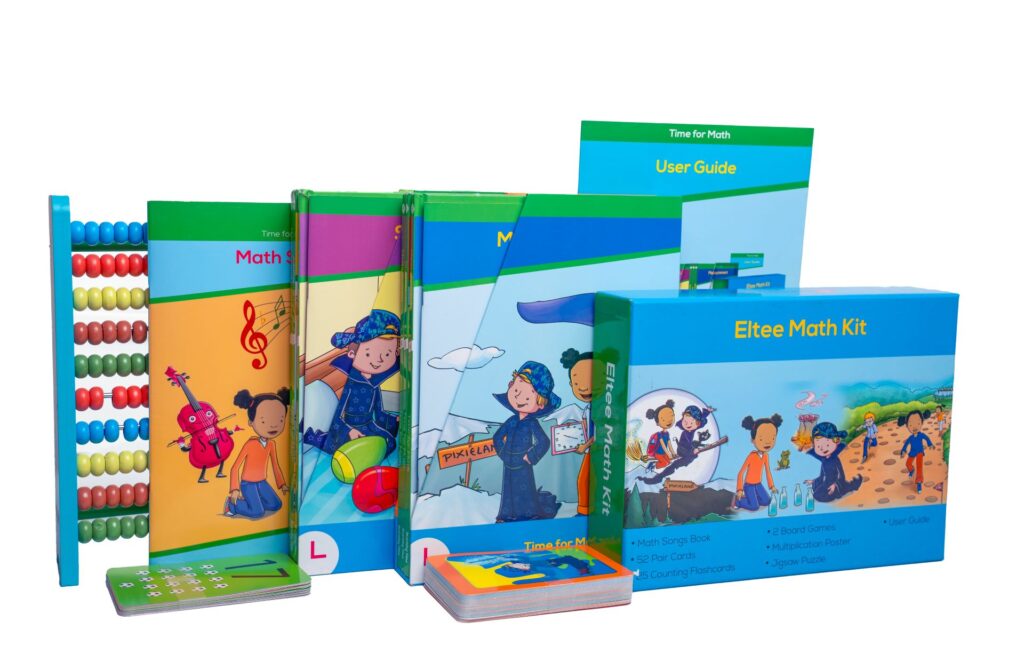
Early childhood is a phase filled with rapid cognitive milestones, natural curiosity, and the instinctive desire to explore the surrounding world. During these formative years, the brain forms connections at an unprecedented rate, making it the perfect window to introduce core educational concepts. Among these concepts, early numeracy often stands out as an area where parents want to provide the best possible start. However, introducing mathematical concepts can sometimes bring an underlying sense of pressure or concern. It is common to wonder how to introduce abstract numbers to a young mind without causing confusion or fatigue. The wonderful reality is that early mathematical development thrives when it is separated from formal, rigid structures. By focusing on joyful, hands-on experiences within the comfort of home, you can easily build foundational math skills for preschoolers while keeping their curiosity fully alive.
When math is woven naturally into daily life, it ceases to be a abstract subject found only in text books and instead becomes a vivid, interactive experience. For children aged zero to six, the physical environment is their primary classroom. They learn by touching, moving, arranging, and observing. Approaching early numeracy through the lens of play removes tension and replaces it with a sense of adventure. This positive association with numbers forms a strong mindset that supports academic confidence for years to come. Shifting the focus from repetitive drilling to meaningful interaction allows young learners to see patterns, understand quantities, and solve problems creatively. The goal is to make mathematical thinking as natural and intuitive as learning to walk or speak.
Understanding the True Nature of Preschool Numeracy
To effectively support early development, it helps to look at what early mathematics actually means for a young child. Many adults automatically associate math with arithmetic, addition sheets, and memorizing equations. In the context of early childhood development, however, math is much broader and deeply interconnected with everyday logic. It encompasses spatial awareness, pattern recognition, data sorting, measurement comparisons, and problem-solving skills. When you aim to build foundational math skills for preschoolers, you are nurturing an overarching mathematical mindset rather than simply teaching them to recite numbers in order.
Reciting numbers from one to ten is often a feat of rote memory, similar to singing an alphabet song. While it is an excellent milestone, the deeper cognitive breakthrough occurs when a child understands that the word three represents exactly three physical items. This concept, known as value correspondence, takes time and varied physical experiences to develop. By using tangible objects that children can hold, move, and count, you transform an abstract sound into a concrete reality. This hands-on realization is the bedrock upon which all future mathematical learning rests.
Focusing on play-based numeracy also honors the specific developmental needs of preschoolers. Young children are concrete thinkers, meaning they understand the world through direct sensory experiences. Expecting them to grasp mathematical symbols on a flat page can sometimes lead to unnecessary friction. On the other hand, inviting them to count physical objects or arrange items by size aligns perfectly with their natural learning styles. This interactive approach ensures that early learning remains a positive, encouraging experience that builds self-assurance.
The Power of Sorting and Categorizing Everyday Items
One of the simplest and most effective ways to nurture an intuitive understanding of mathematics is through sorting and categorization. Sorting is a fundamental logical skill that forms the baseline for data analysis, algebraic thinking, and set theory. When a preschooler looks at a group of objects and decides how to organize them, they are engaging in complex visual discrimination and critical thinking.
The home environment is filled with perfect opportunities for sorting games that require no advanced preparation. Everyday household objects can be transformed into brilliant teaching tools that capture a child’s imagination.
Organizing the Play Space by Attributes
Tidying up after a play session can be repositioned as an engaging math game. Instead of simply placing toys into a large bin, you can invite your preschooler to categorize them by specific attributes. You can suggest creating a pile for all the wooden toys and another pile for the soft plush items. Alternatively, toys can be sorted by color, separating the blue cars from the red ones.
This activity prompts children to examine objects closely, identify similarities and differences, and make logical decisions. As their skills advance, you can introduce sorting by multiple attributes, such as finding all the small blue blocks. This layers the complexity naturally, keeping the activity engaging and cognitively stimulating without adding stress.
Utilizing Kitchen Objects for Mathematical Logic
The kitchen is another fantastic laboratory for hands-on mathematical exploration. Safe kitchen items like plastic containers, colorful lids, or large wooden spoons offer endless variations for sorting. During standard daily routines, you can invite your child to match the plastic containers with their corresponding lids based on size and shape.
Grouping clean laundry socks by size or color is another wonderful way to combine practical life skills with logical classification. These activities show children that mathematics is not an isolated academic chore but a helpful, integrated part of daily family life. It demystifies the concepts and builds an early appreciation for order and structure.
Collecting and Grouping Natural Treasures
Outdoor exploration provides a rich sensory backdrop for mathematical thinking. During a walk in the park or time spent in the garden, encourage your preschooler to collect natural items like smooth stones, fallen leaves, twigs, or pinecones. Once you have gathered a collection, find a comfortable spot to sort these treasures together.
You can group the leaves by shape, arrange the stones from the smoothest to the roughest, or categorize the twigs by length. This tactile connection to nature enhances sensory development while strengthening visual classification. It encourages children to observe details in the living world, reinforcing the idea that mathematical patterns exist all around them.
Transforming Physical Movement into Counting Rhythms
Counting becomes deeply embedded in a child’s memory when it is paired with physical action and rhythm. Attaching a numeric value to a jump, a step, or a clap creates a powerful mind-body connection that reinforces spatial and numerical awareness. This kinesthetic approach is particularly effective for active preschoolers who thrive when their whole body is involved in the learning experience.
Movement-based counting also eliminates the feeling of static repetition. It keeps the energy levels vibrant and converts learning into a game that children naturally want to play.
Counting Stumps, Steps, and Everyday Transitions
Daily transitions, such as moving from one room to another or walking down a garden path, are ideal moments to introduce counting rhythms. You can count each step together as you walk to the front door, or count the number of hops it takes to reach a play mat.
This simple practice teaches the concept of one-to-one correspondence in a physical way. Every time the foot hits the ground, a number is spoken. The child physically feels the progression of numbers, which helps solidify the understanding that each number represents a distinct addition to the total sequence. It transforms a routine walk into an interactive learning journey.
Developing Numerical Memory Through Clapping Games
Rhythm and music are historically linked to mathematical reasoning. You can play simple clapping games with your preschooler to build auditory memory and numerical pattern recognition. Start by clapping a simple sequence, such as two quick claps, and invite your child to mirror the action.
Gradually increase the number of claps or introduce variations in the rhythm. You can count out loud as you clap, helping your child connect the sound of the number with the physical impact of their hands meeting. This playful exercise sharpens focus, enhances listening skills, and introduces the foundational concepts of sequencing and pacing.
Interactive Games of Simon Says with Numbers
Adapting classic childhood games to include a numerical element adds a fresh layer of educational value. A round of Simon Says can easily incorporate math instructions that encourage listening and physical response. You can give directions such as Simon says do three star jumps, or Simon says pat your knees four times.
By keeping the framing completely positive and celebratory, children remain excited to listen closely and execute the correct number of movements. They are practicing counting, retaining instructions, and executing motor skills all at once, creating a holistic development opportunity.
Exploring Geometry and Spatial Reasoning in Play
Geometry at the preschool level focuses on understanding shapes, sizes, positions, and how objects relate to one another in space. Developing strong spatial awareness early in life has been shown to support future problem-solving capabilities and geometric understanding. The playroom floor provides an ideal arena for these structural discoveries.
Through building, manipulating shapes, and exploring spatial limits, children learn to navigate three-dimensional spaces and predict how different forms interact.
Engineering and Balance with Construction Blocks
Whether utilizing classic wooden blocks, cardboard boxes, or interlocking play sets, building towers is a profound mathematical exercise. As a child stacks blocks, they are experimenting with gravity, balance, weight, and dimensions. They quickly learn that a wide, sturdy base is required to support a tall structure.
You can naturally introduce spatial vocabulary during these play sessions without sounding clinical. Discussing whether a block is placed on top, underneath, next to, or behind another block strengthens their spatial vocabulary. You can also explore how many smaller blocks are required to match the length of one long block, introducing early fractions and ratios through pure play.
Everyday Architectural Scavenger Hunts
A shape scavenger hunt turns the home into an interactive puzzle book. Choose a specific shape, such as a circle, and explore the house together to find as many round objects as possible. Your search might reveal a wall clock, a round plate, a coin, or the wheel of a toy truck.
Once circles are mastered, move on to rectangles, squares, and triangles. This exercise trains the child’s eyes to recognize geometric properties in everyday design. It shifts their perspective from seeing objects as isolated items to recognizing the underlying structural forms that compose their world.
The Role of Puzzles in Mental Rotation
Age-appropriate puzzles are incredible tools for developing spatial reasoning and fine motor control. When a preschooler picks up a puzzle piece, looks at a space, and turns the piece until it fits perfectly, they are performing a complex cognitive task called mental rotation.
This ability to manipulate shapes mentally is a core component of advanced spatial mathematics. Providing puzzles with vibrant, friendly illustrations keeps children motivated to solve the challenge. Celebrating their persistence when a piece clicks into place builds a healthy relationship with problem-solving and challenges.
Play-Based Measurement without Rulers
Long before children learn to read the fine markings on a standard ruler or understand centimeters and inches, they can grasp the fundamental principles of measurement. Early measurement is all about comparison, balance, capacity, and estimation. Non-standard measurement allows preschoolers to explore these ideas using familiar objects as their units of scale.
By removing the abstraction of standard units, children focus entirely on the physical property being observed, whether it is weight, volume, or length.
Sensory Volume Explorations with Water and Grains
A simple sensory bin filled with water, dry rice, or clean sand offers a wonderful arena for volume and capacity exploration. Provide your preschooler with an assortment of clear plastic cups, small scoops, funnels, and large containers. Allow them to freely transfer material from one vessel to another.
You can ask playful questions to guide their observations, such as wondering how many small scoops are needed to fill the tallest cup. Watching a large container overflow when filled by a smaller one teaches valuable lessons about volume limits and containment. This fluid, unstructured play builds an intuitive understanding of capacity that makes formal measurement lessons much easier to comprehend later on.
Measuring Longevity and Length with Toy Links
Instead of using a measuring tape, you can use uniform items like plastic paperclips, wooden blocks, or small toy bricks to measure the length of larger objects. Line up toy cars side by side and count how many blocks long each car is. You can discover that the toy truck is seven blocks long, while the little sedan is only three blocks long.
This hands-on comparison clearly demonstrates the concept of length and relative size. It teaches children how to align items accurately from end to end to achieve an accurate count, establishing proper measurement habits in an entirely playful context.
Investigating Weight and Balance with Hands-on Tools
Understanding weight requires a physical sensation of heaviness and lightness. You can create a simple balance scale using a clothing hanger and two small baskets, or simply use your child’s own hands as the scale. Place a heavy wooden block in one hand and a soft cotton ball in the other.
Encourage your child to feel the difference and notice which hand drawn downward by weight. Discussing why certain small items can be surprisingly heavy while some large items are light expands their conceptual thinking. It prevents simple misconceptions and encourages analytical observation of material properties.
Fostering a Screen-Free Learning Environment at Home
In a modern world filled with digital screens and flashing devices, creating a calm, distraction-free environment is incredibly beneficial for early childhood development. When learning to build foundational math skills for preschoolers, the presence of digital overstimulation can sometimes disrupt deep focus and independent thought. A screen-free approach allows children to fully immerse themselves in the physical world, using all five senses to process new ideas.
A distraction-free environment encourages sustained attention spans, creative problem-solving, and meaningful communication between parent and child. It ensures that the learning process is driven by the child’s own natural curiosity rather than artificial digital rewards.
The Value of Deep, Uninterrupted Play
When a child is allowed to play without the background noise of a television or the interruption of glowing notifications, something beautiful happens. They enter a state of deep engagement where true learning occurs. They can focus completely on the tower they are building, the pattern they are forming, or the objects they are counting.
This deep play helps develop the prefrontal cortex, the area of the brain responsible for focus, impulse control, and working memory. By intentionally setting aside screen-free hours dedicated to interactive play, you create a sanctuary where your child’s cognitive abilities can flourish naturally and peacefully.
Enhancing Parent-Child Communication
Interactive play is a collaborative experience that opens the door for rich language development. As you sort shapes or count steps together, you are sharing a meaningful conversation. Using descriptive mathematical words like heavier, empty, identical, and opposite exposes your child to sophisticated vocabulary in context.
This verbal interaction is far more educational than any automated voice from a tablet screen. Your responsive encouragement, shared laughter, and collaborative problem-solving make the educational journey feel safe, warm, and deeply rewarding. It strengthens the familial bond while elevating the child’s intellectual development.
Nurturing Natural Curiosity and Persistence
Physical toys require active manipulation. If a block tower falls, the child must physically analyze what went wrong and rebuild it. This process fosters resilience, patience, and a healthy approach to mistakes. Digital games often fix errors automatically or provide instant gratification, which can reduce a child’s tolerance for real-world challenges.
By emphasizing tangible, screen-free materials, you teach your child that problem-solving is an active, creative process. They learn to view a fallen tower not as a failure, but as an opportunity to try a new design. This emotional resilience is just as important for future academic success as the mathematical concepts themselves.
Incorporating Thoughtful Educational Tools
While everyday household objects are wonderful, incorporating intentionally designed educational tools can beautifully enrich your home learning environment. High-quality educational programs and interactive learning kits offer structured, screen-free support that seamlessly aligns with a play-based philosophy.
The ideal tools are those that invite tactile exploration, offer gentle sensory feedback, and encourage independent discovery. They act as a helpful bridge, organizing mathematical concepts into clear, inviting pathways that a child can explore at their own unique pace.
The Power of Multi-Sensory Audio Tools
One innovative way to support independent, screen-free learning is through high-quality audio interaction tools. Imagine an educational system where a child uses a responsive, smart audio pen to touch a beautifully illustrated book. The pen instantly plays engaging sounds, catchy songs, and gentle prompts without the need for a digital screen.
This multi-sensory approach combines the physical benefits of a real book with the dynamic engagement of high-quality audio. Children can touch an illustration of three friendly bears, hear a pleasant voice count them aloud, and follow along with their fingers. It provides immediate, encouraging feedback that reinforces their independent efforts and keeps learning exceptionally positive.
Comprehensive Learning Programs Designed for Home Use
Investing in a cohesive early childhood learning program ensures that you have a steady supply of age-appropriate ideas and materials as your child grows. A comprehensive program takes the guesswork out of early childhood education, providing parents with clear guidance and beautifully crafted resources.
These programs typically cover early numeracy, language skills, and social-emotional development through integrated themes. Having a curated set of books, games, and audio resources makes it easy to incorporate educational moments into your busy daily schedule, ensuring consistency and long-term progress.
Supporting Independent Self-Correction
A key feature of premium educational tools is the ability to facilitate self-correction. When a game or book is designed so that a child can naturally figure out the correct answer through exploration, it builds profound confidence. They do not need to constantly look to an adult for validation or fear making a mistake.
If they select an incorrect option, the gentle audio guide or physical alignment of the piece invites them to try again. This self-paced discovery removes anxiety entirely, replacing it with a sense of mastery and autonomy. Your preschooler becomes the active leader of their own learning journey, which is the ultimate goal of early education.
The Beautiful Reality of Life After Adopting Interactive Numeracy
Shifting your approach from traditional learning pressure to joyful, interactive play transforms the entire atmosphere of your home. The daily stress of wondering if your child is hitting the right academic milestones dissolves, replaced by a calm confidence in their natural development. You start to see mathematical thinking blossom in spontaneous, delightful ways during ordinary moments.
When early numeracy is rooted in joy, your child begins to view themselves as a capable problem-solver. You will notice them voluntarily counting their blocks, identifying patterns in the curtains, and proudly carrying a heavy toy to explain measurement concepts. Math becomes a language of celebration and discovery rather than a source of tension.
Furthermore, this approach prepares your child beautifully for the transition to formal schooling. They will enter the classroom with a robust vocabulary, sharp spatial reasoning, and an intuitive understanding of numerical values. More importantly, they will arrive with an unquenchable love for learning and an unshakeable belief in their own capabilities. By embracing simple, interactive ways to build foundational math skills for preschoolers, you are giving your child a beautiful gift that will support their intellectual and emotional growth for a lifetime.