
Modern households are filled with vibrant energy, boundless curiosity, and an ever-increasing abundance of digital inputs. For parents navigating the early years of child development, the desire to foster optimal cognitive growth frequently comes into contact with the realities of digital overstimulation. Children are natural explorers, born with an intrinsic drive to touch, taste, build, and interact with the physical world around them. When this natural curiosity is supported by a structured, intentional physical space, magical milestones occur. Establishing a productive screen free home learning environment is the absolute best way to help young minds interact with the physical world in a structured, meaningful way. Parents often seek balance, wanting to replace passive viewing with active doing. By deliberately structuring the home space, families naturally invite exploration, concentration, and deep cognitive engagement without relying on digital devices.
The foundation of early education rests on multisensory experiences. When a child touches, builds, sorts, and listens, multiple neural pathways light up simultaneously across both hemispheres of the brain. Cultivating a specialized space dedicated to these tangible activities shifts the daily routine from a constant battle against devices to an enthusiastic embrace of real-world discovery. The process of establishing a screen free home learning environment is an empowering journey that transforms ordinary living areas into dynamic launchpads for lifelong curiosity.
To bridge the gap between everyday home life and structured developmental success, families require comprehensive, systemic tools. The A+ Program from Learning Time, available through The Little Years with Windress, provides exactly this foundation. By combining physical learning kits, beautifully illustrated books, and responsive audio tools, this premium system empowers parents to activate their home environment with minimal stress and maximum educational impact.
Understanding the Physical Foundation of Early Learning Spaces
To begin the transformation of a standard living room or playroom into an optimal developmental center, one must evaluate the home entirely through the eyes of a young child. Children perceive physical space with an entirely different sensory filter than adults. Scale, accessibility, furniture height, and visual clutter directly impact their attention spans, emotional comfort, and capacity for deep play. A well-organized room acts as a silent teacher, guiding behavior and choices without requiring constant parental direction or verbal reminders.
Visual Clarity and Minimalist Design
An environment crowded with too many options can quickly overwhelm a developing mind. High-density toy bins, overflowing shelves, and chaotic piles of mixed items often lead to brief, unfocused play patterns where items are dumped out and quickly abandoned. This behavioral cycle stems from decision fatigue. When a child sees twenty disparate options at once, the brain experiences a sensory overload that limits deep concentration. Visual clarity is the antidote to this cycle.
-
Selective Display: Keep only a few high-quality, targeted resources visible at any given time. Placing items neatly on low shelves invites focused attention.
-
Rotational Systems: Store the remainder of the learning materials in a separate closet or storage area. Periodically swapping items maintains a high level of novelty, curiosity, and excitement.
-
Defined Work Surfaces: Provide dedicated spaces for distinct tasks. A low table for puzzles, a small rug for building blocks, and an easel for art help define the scope of an activity.
By reducing visual noise, the physical area naturally encourages deeper concentration. A child walking into a calm, orderly space can immediately identify an interesting project and dedicate substantial time to mastering the skill it presents.
Ergonomics and Child-Centric Accessibility
Independence is a primary driver of confidence and self-regulation in early childhood. When children can access their learning tools without asking for adult assistance, their intrinsic motivation increases exponentially. Ergonomics plays a vital role in sustaining long periods of independent focus.
Furniture should be perfectly proportioned to the child’s size. Feet should rest flat on the floor when sitting at a table to ensure proper posture and spinal alignment, which directly influences physical comfort and attention span. Shelves should be low enough that items can be reached safely without stretching or risking falling objects. Lightweight baskets, open wooden trays, and transparent containers allow children to see exactly what is available. This intuitive setup also simplifies the clean-up process, turning tidying up into a positive, skill-building component of the daily routine rather than a chore.
Designing a screen free home learning environment with Targeted Zones
A comprehensive screen free home learning environment benefits from distinct, purposeful zones that cater to various aspects of child development. Just as a professional preschool classroom is divided into functional centers, a home can utilize small corners, specific alcoves, or designated rooms to encourage varied forms of processing, thinking, and physical expression.
The Reading Sanctuary for Language and Literacy
Literacy development flourishes when physical books are integrated seamlessly into the daily fabric of the home. Rather than stacking books on a high shelf with only the spines showing, create an inviting, dedicated reading zone that acts as a focal point for the room.
A comfortable seating arrangement, such as a plush floor cushion, a soft beanbag, or a child-sized armchair, establishes a sense of warmth, safety, and security. Pair this comfort with a forward-facing book rack where the colorful, engaging covers are fully visible at the child’s eye level. This visual presentation naturally draws children toward literature, making book selection an intuitive choice. Surround this space with open-ended storytelling tools, such as felt boards, character figures, or soft puppets, which allow children to act out the narratives they experience.
Regular exposure to this environment builds a strong lifelong association between comfort and reading. It establishes a comforting ritual where language is celebrated, vocabulary expands naturally, and comprehension deepens through peaceful, unhurried interaction with printed pages.
The Tactile and Construction Zone for Spatial Reasoning
Mathematical concepts, spatial intelligence, and scientific principles are best understood through physical manipulation long before abstract worksheets are introduced. The tactile and construction zone serves as a laboratory where gravity, balance, geometry, weight, and spatial relationships are tested in real time through trial and error.
Equip this area with high-quality, open-ended materials that do not dictate a single way to play. Wooden unit blocks, magnetic tiles, interlocking gears, and nesting cups offer infinite possibilities for creation. When a child builds a tower, they are actively solving architectural problems, testing hypotheses, and practicing fine motor control.
This zone benefits greatly from a hard, flat surface, such as a wooden floor or a firm play table, to ensure stability for complex structures, alongside a low-pile rug to dampen the sound of falling blocks and provide physical comfort during floor play. Grouping materials by type in labeled baskets helps children learn classification, organization, and sorting skills during both preparation and cleanup.
The Creative Expression Station for Fine Motor Skills
Artistic exploration provides an essential emotional outlet, encourages creative problem solving, and refines the precise muscles in the fingers and hands needed for eventual writing. A dedicated creative station gives children the freedom to experiment with colors, textures, patterns, and physical forms.
-
Accessible Mediums: Provide thick crayons, washable markers, safety scissors, non-toxic modeling clay, watercolor paints, and various types of textured paper.
-
Process-Oriented Tools: Emphasize raw materials over structured coloring books. Plain paper encourages original thought, imagination, and completely free expression.
-
Display Spaces: Dedicate a wall, a clothesline with clips, or a bulletin board to celebrate finished work, showing the child that their creative efforts are valued, respected, and admired.
To minimize parental stress and maintain a positive, welcoming tone, choose a location with easily cleanable flooring, or use a durable plastic splash mat beneath the workspace. When the physical setup minimizes clean-up friction, parents can encourage messier, highly beneficial sensory work like finger painting, sensory bin exploration, or clay sculpting with complete peace of mind.
Integrating Multisensory Tools for Enhanced Engagement
A productive screen free home learning environment relies on premium, physical alternatives that capture attention just as effectively as digital screens, but with far greater developmental benefits. Sensory engagement is the absolute cornerstone of early learning, and specific physical tools can elevate the educational value of the home space, transforming play into a comprehensive learning experience.
Responsive Audio Tools and Independent Exploration
One innovative way to support independent exploration without utilizing screens is through the integration of responsive audio tools. Devices like interactive audio pens or screen-free audio players allow children to control their learning experience through physical touch and high-quality sound.
When a child touches an interactive pen to a specially printed book, talking flashcard, or wall chart, they receive immediate vocal guidance, crisp sound effects, real-world pronunciations, or musical cues. This responsive feedback loops perfectly into the screen free home learning environment by providing auditory enrichment while keeping the child’s eyes fixed on physical pages and real-world illustrations. It bridges the gap between self-directed discovery and guided instruction, allowing children to explore complex topics like foreign languages, phonics, geography, or classical music completely independently, building focus and self-reliance.
Real-World Science and Discovery Tools
Young children are natural scientists. They learn by observing, testing, measuring, and cataloging the world around them. Introducing real, simplified scientific instruments into the home environment validates their natural curiosity and elevates their play into meaningful research.
-
Magnifying Glasses: Sturdy, oversized magnifying lenses encourage children to inspect the intricate details of leaves, fabrics, rocks, and everyday household objects.
-
Simple Scales: Balance scales with weights allow for hands-on exploration of mass, volume, gravity, and mathematical comparisons.
-
Nature Trays: A designated tray for collecting rocks, pinecones, seeds, shells, and twigs brings the beauty of the outdoors inside, prompting classification and observation activities.
These specialized tools teach children to look closer, ask deeper questions, and develop logical thinking habits. They quickly realize that the physical world holds endless mysteries waiting to be solved through careful observation, attention to detail, and patience.
Establishing Positive Routines Within a screen free home learning environment
The physical setup is only half of the educational equation; the daily rhythm and routine determine how successfully the space is utilized by the child. Introducing structured yet flexible routines ensures that the screen free home learning environment becomes a natural, expected, and highly anticipated part of a child’s day.
Transitioning into Focused Learning Periods
Moving from high-energy outdoor activities or chaotic play into focused learning periods requires intentional, gentle transitions. Instead of abrupt commands or countdowns that can cause anxiety, use predictable environmental cues to signal a natural change in pace.
A specific melody played on an instrument, a gentle dimming of overhead lights, or a brief physical stretching ritual can signify that it is time to choose a learning zone. Begin with short, manageable intervals of focused exploration, gradually extending the duration as the child’s physical stamina and mental focus grow over time. When these transitions are consistent and predictable, children experience a deep sense of safety and routine, which reduces behavioral resistance and helps them settle into deep, imaginative play with complete ease.
Fostering Autonomy Through Guided Choice
A truly productive home environment balances adult structure with child-led freedom. Rather than assigning specific tasks or commanding a child to complete a worksheet, offer guided choices within the established zones.
Ask open-ended questions that empower the child to take ownership of their afternoon activity. For instance, inquire whether they prefer to explore geometric patterns with the blocks or discover new words in the reading sanctuary. This empowering approach honors the child’s autonomy while ensuring that every available option on display is highly productive, educational, and developmental. Over time, children develop strong decision-making skills and learn to follow their unique intellectual interests with confidence and joy.
Nurturing Parental Confidence and Educational Problem Solving
Shifting away from digital dependence toward a tactile, sensory-rich home environment is a rewarding journey that honors patience, consistency, and intentionality. Parents often face initial uncertainty about how to sustain high engagement without the convenience of digital entertainment or passive videos. Viewing this transition as an educational opportunity helps reframe daily challenges into collaborative milestones for the entire family.
Scaffolding Independence Step by Step
Independent play within a screen free home learning environment is a learned skill that requires parental scaffolding and support. Children rarely transition to long stretches of independent work overnight; they must be taught how to engage deeply with physical materials.
-
Co-Regulation and Modeling: Begin by sitting side-by-side with the child in the chosen zone, demonstrating how to interact with the materials, asking curious questions, and sharing the initial excitement of discovery.
-
Gradual Withdrawal: Once the child is deeply engaged in their project, move slightly further away, perhaps sitting at the main table reading a book or working on a notebook while remaining physically present and attentive.
-
Complete Independence: Eventually, the child will comfortably initiate, sustain, and clean up their play while the parent manages other household or professional responsibilities across the room.
This step-by-step scaffolding builds secure attachment, boosts self-confidence, and teaches the child that their independent work is valuable, respected, and fully supported.
Cultivating a Growth Mindset Through Affirmation
The specific language used within the learning space heavily influences a child’s persistence and resilience when facing challenges. Focus positive affirmations on effort, strategy, creativity, and problem-solving rather than abstract final outcomes or perfection.
Celebrate the persistence required to balance a difficult block structure after multiple collapses, or the creativity used to mix a new color at the art station. Highlighting the process teaches children that mistakes are simply helpful data points in the learning journey. They become resilient, brave learners who are willing to tackle complex puzzles, try new things, and think outside the box, establishing a foundational growth mindset that will serve them across all future academic and personal endeavors.
The Developmental Impact of early Interactive Learning
The early years of a child’s life represent a unique window of rapid brain development. During this critical period, the brain forms millions of new neural connections every single second. The quality of a child’s surroundings and the nature of their daily experiences directly shape the architecture of the brain, laying the groundwork for all future learning, behavior, and emotional health.
When a child is immersed in a screen free home learning environment, they are not simply passing the time; they are actively building cognitive scaffolding. Studies consistently demonstrate that interactive, physical play supports executive function skills, which include working memory, mental flexibility, and self-control. These three core skills enable children to filter distractions, prioritize tasks, set and achieve goals, and sustain focus on a single activity.
Furthermore, physical interaction with educational tools builds strong fine and gross motor skills. Squeezing clay, turning pages, balancing blocks, and tracing shapes strengthen the muscles in the hands and fingers while refining hand-eye coordination. These physical capabilities are direct prerequisites for learning to write, type, and perform complex tasks later in life. By providing a rich array of physical materials, parents ensure that their children develop the physical dexterity required to match their expanding minds.
Social and emotional development also receives a profound boost within a structured home environment. When children engage in self-directed, open-ended play, they learn to navigate frustration, celebrate small victories, and practice patience. They develop a secure sense of self, learning who they are as independent thinkers and creators. This internal security translates into greater emotional resilience, allowing them to adapt to new situations, cooperate with others, and approach challenges with a positive, problem-solving attitude.
Elevating the Home with the Learning Time A+ Program
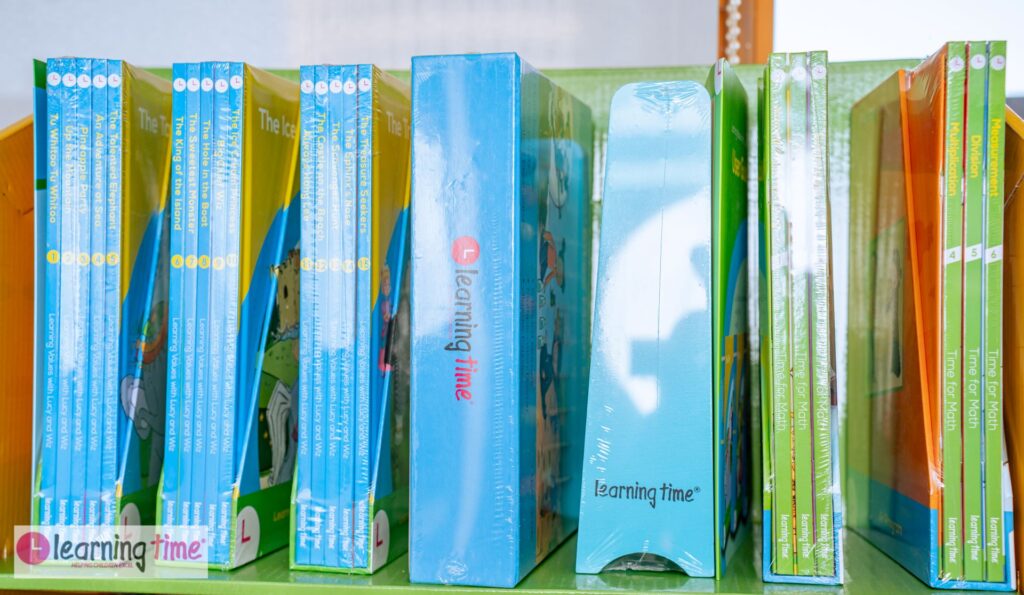
While designing a screen free home learning environment from scratch may feel like a daunting task, parents do not have to embark on this journey alone. The key to sustaining engagement and ensuring measurable educational progress lies in utilizing a structured, cohesive system that grows alongside the child. This is exactly where the Learning Time A+ Program becomes an invaluable asset for modern families.
Available directly through The Little Years with Windress, the A+ Program is a meticulously crafted, multi-component educational system designed specifically for early childhood development at home. It removes the guesswork from creating a productive learning environment by providing parents with a complete library of interconnected resources that target essential developmental milestones.
A Cohesive Library of Interactive Books
The narrative component of the A+ Program features beautifully designed, durable books that go far beyond standard reading material. These stories are specifically written to teach essential values, cognitive concepts, and emotional intelligence through relatable characters and engaging story arcs.
When placed within the forward-facing shelves of your reading sanctuary, these books become a powerful magnet for independent exploration. The illustrations are vivid and rich with detail, encouraging children to look closely and think critically about the story. Because the books integrate seamlessly with the responsive audio tools included in the program, children can engage with the narratives on multiple sensory levels, hearing correct pronunciations, dramatic line deliveries, and immersive background sounds that bring the stories to life without the need for a digital screen.
Target-Driven Learning Kits and Flashcards
Beyond storytelling, the A+ Program includes specialized learning kits, flashcards, and physical games that target specific early childhood competencies, including mathematical reasoning, early literacy, scientific inquiry, and cultural awareness.
These materials are designed to be entirely self-correcting and tactile. For example, math kits utilize concrete counters, shapes, and patterns that allow children to physically see and feel the concept of numbers, addition, and patterns. Talking flashcards provide instantaneous audio reinforcement when paired with the interactive pen, allowing children to practice phonics, vocabulary words, and sentence structures independently. This structured variety ensures that the tactile and construction zones remain fresh, exciting, and highly educational week after week.
Empowering Parents with Expert Guidance
One of the most profound benefits of investing in the A+ Program through The Little Years with Windress is the extensive parental support and guidance built directly into the system. Every kit and book series comes complete with clear, actionable guides for parents, explaining the educational purpose behind each material and offering practical ideas for extension activities.
This comprehensive guidance transforms parents into confident educational facilitators. Instead of spending hours researching activities online or feeling uncertain about their child’s developmental progress, parents receive a clear, step-by-step roadmap. The program shows you exactly how to introduce new concepts, how to scaffold your child’s independent work, and how to use positive framing to encourage persistence and curiosity. It turns the home into a stress-free, harmonious environment where learning happens naturally through shared joy and meaningful interaction.
Transforming Everyday Spaces into Lifelong Classrooms
The long-term cognitive and emotional benefits of a screen free home learning environment extend far beyond the early childhood years. By prioritizing physical interaction, spatial reasoning, language literacy, and autonomous choice, parents establish healthy cognitive habits, strong focus patterns, and critical thinking skills that endure for a lifetime.
When children are given the space, routines, and tools to explore the world through their own physical efforts, they develop an internal drive to discover, understand, and create. They learn that answers are found through observation, experimentation, and persistence rather than by clicking a button or waiting for a digital screen to refresh. This shift from a passive consumer of information to an active generator of knowledge is the ultimate goal of early childhood education.
A home configured for physical exploration proves to young children that learning is not a passive activity confined to a school desk or a digital monitor. Instead, it is an active, exciting adventure woven into the very fabric of daily life. As your child grows, the shelves will naturally evolve, the physical tools will become more sophisticated, and the learning concepts will deepen. However, the foundational love for self-directed discovery nurtured within your carefully designed home environment will remain a constant, powerful force guiding them toward fulfillment, confidence, and academic success.
To take the first definitive step toward transforming your home into an empowering sanctuary of early childhood development, discover the complete suite of resources available at The Little Years with Windress. By embracing the Learning Time A+ Program, you provide your child with the premium, tactile tools they need to build a brilliant mind, a resilient character, and a lifelong love of learning. Explore the program today and unlock the full educational potential of your home space.